Product design leader
Jessica Loredo
Empathy is a core value for me. So are curiosity, rigor, strategy, and craft.
I don't fit the mold of a typical corporate leader, and I don't want to. I build products that are cross-disciplinary and made with humans in mind, including when I build with AI — which is often.*
* That em dash was all mine, btw.
Senior Manager, Product Design at Discovery Education, managing design teams since 2019. Fifteen years in product design across K-12 edtech, healthcare, and enterprise software, and clinical counseling training in how people change.

- Creative leadershipFour companies since 2019
Mixed-role teams of up to eight direct reports: product designers, UX writers, researchers, design ops, and contractors.
- Executive partnershipRoadmap and resourcing
Working directly with executive leadership across product, engineering, and curriculum.
- High-impact designStrategy and fast execution
Twice, a prototype I built was good enough to sell with: one kept a $300K ARR district partnership, and one went straight into client conversations that retained and won accounts.
- Team growth & retentionTools to visualize career pathing
Built career growth frameworks at two organizations. The current one is the basis for the company HR framework.
- 01 · Strategy
I lead design toward outcomes, not opinions
Taste alone does not earn a seat at the table. Every direction I set, I can trace back to a business reason, a roadmap priority, or a cost we are trying to avoid. That is what keeps design in the room when budgets tighten.
- 02 · Operations
Process exists to disappear
A team should not be able to feel the process when it is working right, only when it breaks. I build just enough structure to keep quality consistent and cut whatever adds friction without adding value.
- 03 · Operations
Taste does not scale, so we write it down
AI will happily produce something generic. Our team writes our design judgment into guidelines the AI works from: style, standards, and what good looks like here. The tools get faster every month; the judgment is still ours.
- 04 · Research
Define the word before you measure it
Teams run on words like engagement and quality without ever agreeing on what they mean. Before I put a number on something, I get everyone to a shared definition grounded in research, so the metric tracks the thing we actually care about.
- 05 · Career growth
I build the ladder, then I help people climb it
Vague growth conversations waste everyone's time. I define what the next level actually requires, in writing, and I tell people the truth about where they stand against it, even when that is not what they want to hear.
- 06 · People
AI fluency is a skill, so I coach it like one
Handing a team a tool license is not a strategy. People come to AI with different comfort, different roles, and different amounts of bandwidth. I coach one-on-one, build shared training for the whole team, and push for the part that matters most: knowing when the output is wrong.
- 07 · People
Hire the person, not the portfolio
I look for communication, a process of their own even if it is not the double diamond, dedication to craft, and humor. Some of the best teammates I have worked with had average portfolios, and I have been that designer too.
- 08 · People
Service is the job, and so is the hard conversation
Helping people grow is what fills my cup. That is not softness: counseling training means I can name a performance problem and sit in conflict without flinching. (I can also sit in silence for an uncomfortably long time. Try me.)
What I've built for the teams I lead
- Org charts and team structure
- Job descriptions and hiring process
- Career growth frameworks
- Goals, OKRs, and delivery tracking
- Culture surveys, acted on
- Team meetings built around real gaps
- Regular critiques and share-outs
- Delegation that grows new leads
- Workshops that set product direction
- AI skill-building, one-on-one and team-wide
- Written AI guidelines grounded in design judgment
- Design-to-code workflows with AI in the loop
 01The Experience Transformation
Two products shared one front door, and the most common search on the platform was empty. Rebuilt around teacher workflow, with an architecture that encodes how instruction sequences.
Shipped at scale 02The Designer Growth Framework
A design org had no structured way to see growth. The system built to fix it was adopted by HR and became the company instrument.
Organizational influence 03Exact Path
A student experience designed in about a month for a product that did not exist yet. It is still shipping a decade later, which says as much about the industry as it does about the design.
Ten years in production 04Start Your Future
Teens are fluent in digital spaces and cannot see the path from that fluency to a career. The gap is not information. It is self-efficacy, so the intervention has to be built for confidence.
Theory into designIndependent products, designed and shipped end to end with Claude, Cursor, GitHub, and Vercel. I stay close to the craft I ask teams to practice.
Building them taught me that readable code, real test cases, and clear documentation matter as much as the code itself, so that's where a lot of my time goes. It's also pulled me toward design operations and AI integration, and I'm learning as much as I can about design systems along the way.
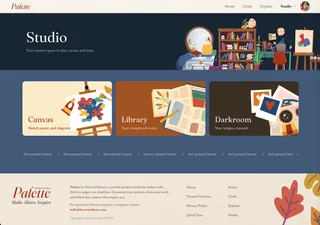 PaletteA community for makers
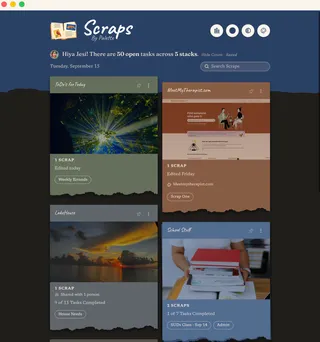 Scraps by PaletteA pocket notebook for loose ends
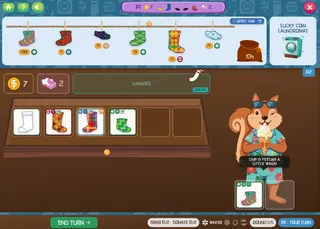 Palette GamesBookshelf Bedlam, The Lost Socks, Fox's Forgery, Pencil Panic
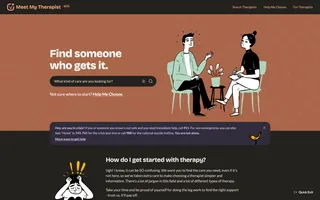 Meet My TherapistFinding the right fit · demo with sample therapists
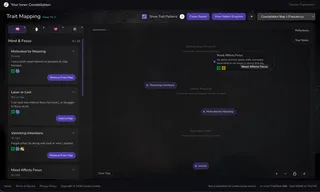 Your Inner ConstellationTraits made visible
Strategy and research in long form, grounded in the literature and written to be used.
I've been making art my whole life, lately mostly digital painting. It's where my eye comes from.
Let's talk
I'm open to product design leadership roles in learning, mental health, and mission-driven work. If any of the above is the kind of thinking your team needs, I'd like to hear about it.